

 5 Jul
5 JulHow to Choose the Right Size Dog Collar (And Why It Matters More Than You Think)
Picking a dog collar might seem like a simple task — grab one in a color you like, buy the size that matches your dog’s breed, done. But collar fit is one of those small details that has an outsized impact on your dog’s safety, comfort, and even their ability to be found if they ever get lost. A collar that’s too loose can slip off during a walk. One that’s too tight can chafe, restrict breathing, or damage your dog’s trachea over time. Getting the size right isn’t fussy pet-parenting — it’s a genuine safety essential.
This guide walks you through exactly how to measure your dog, choose the right size, pick the right material, and spot the warning signs of a poor fit.
Why Collar Fit Is a Safety Issue, Not Just Comfort
It’s easy to think of a collar the same way you’d think of a leash or a bandana — an accessory. But your dog’s collar does real work every day:
- It holds ID tags and rabies tags that are often the only thing standing between a lost dog and a trip to the shelter.
- It’s frequently the attachment point for a leash, meaning it absorbs pulling force, sudden lunges, and daily tension.
- It sits directly against sensitive anatomy — the trachea, esophagus, and thyroid gland are all close to the surface of a dog’s neck.
A collar that’s too tight can cause chronic pressure on the windpipe, leading to coughing, gagging, or in severe cases, tracheal damage — this is a particular concern for small and toy breeds, whose tracheas are naturally more delicate. A collar that’s too loose is a slip-off risk, especially for dogs with narrow heads (like Greyhounds and Whippets) or dogs who panic and pull backward when startled.
In short: the right fit protects your dog’s airway, keeps their ID information on them where it belongs, and keeps them physically secured to you on walks. That’s a lot of responsibility for one small piece of gear — which is exactly why it’s worth getting right.
How to Measure Your Dog’s Neck Correctly
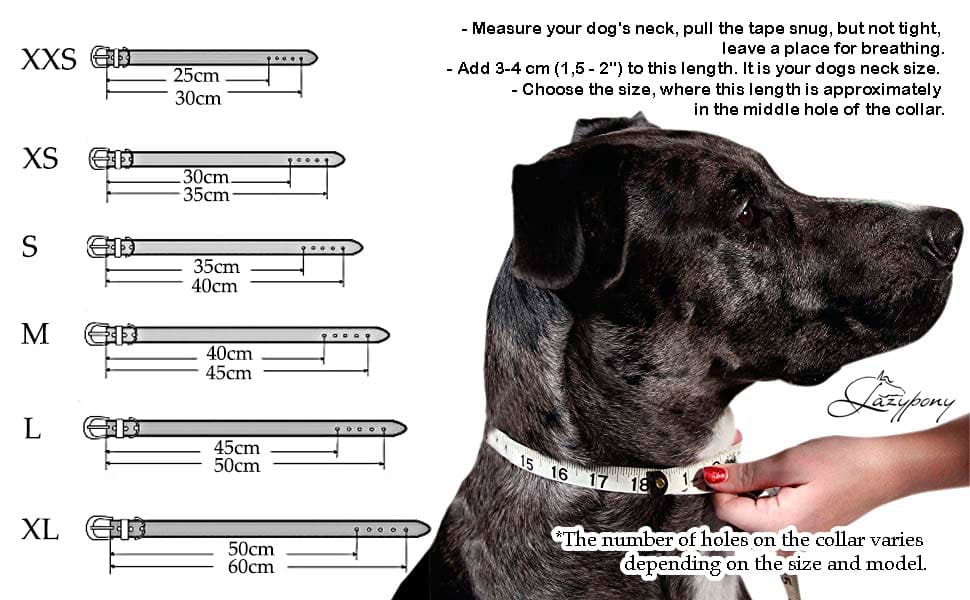
Before you shop, grab a flexible fabric or plastic tape measure (a cloth sewing tape works best; a stiff metal one won’t curve naturally around the neck).
Step-by-step measuring:
- Locate the right spot. Measure around the middle of your dog’s neck, roughly where a collar would naturally sit — a few inches down from the base of the skull, not right up against the jaw.
- Wrap the tape snugly, not tightly. The tape should sit close to the neck without pressing into the skin.
- Do the two-finger test. Once wrapped, slide two fingers flat between the tape and your dog’s neck. If they fit snugly with a little resistance, that’s your correct measurement.
- Add growing room for puppies. If your dog is still growing, add 1–2 inches to the measurement, and plan to re-measure every few weeks.
- Measure twice. Neck size can shift slightly with coat thickness or weight changes, so it’s worth double-checking, especially with fluffy or double-coated breeds where fur can throw off your first measurement.
Once you have a number in inches (or centimeters), you’re ready to match it to a size chart — but remember, this measurement is the dog’s actual neck size, not the collar size. Most collars are adjustable across a range, so you’ll want your dog’s number to fall comfortably in the middle of that range, not at either end.
Size Chart: XS to XL with Breed Examples
Collar sizing varies a bit by brand, but here’s a general guide to help you narrow down where your dog likely falls:
| Size | Neck Size Range | Typical Breed Examples |
|---|---|---|
| XS | 6–10 inches | Chihuahua, Yorkshire Terrier, Toy Poodle |
| S | 10–14 inches | Dachshund, Pug, Shih Tzu, Cavalier King Charles Spaniel |
| M | 14–18 inches | Beagle, Cocker Spaniel, French Bulldog, Border Collie |
| L | 18–22 inches | Labrador Retriever, Golden Retriever, German Shepherd |
| XL | 22–28 inches | Great Dane, Mastiff, Saint Bernard, Rottweiler |
A few important caveats:
- Breed is a starting point, not a guarantee. Individual dogs vary widely even within a breed, especially with mixed breeds. Always measure — don’t size based on breed alone.
- Neck width matters as much as breed size. Muscular or broad-necked breeds (like Bulldogs or Boxers) may need a size up from what their body size suggests.
- Collar width scales with size, too. Larger dogs generally need wider collars (1–2 inches) for durability and even pressure distribution, while smaller dogs do better with narrower collars (⅜–¾ inch) that won’t overwhelm their frame.
Material Guide: Leather vs. Nylon vs. Rope
Once you know the size, material is the next big decision — and it affects durability, comfort, and upkeep.
Leather Leather collars are known for their durability and how they soften and mold to your dog’s neck over time, offering a comfortable, broken-in feel. They tend to be gentle on fur and skin, making them a solid pick for dogs with sensitive coats. The trade-offs: they cost more upfront, need occasional conditioning, and aren’t ideal for dogs who swim often or get muddy regularly, since repeated soaking can dry out and crack the leather.
Nylon Nylon is the most common collar material for good reason — it’s affordable, lightweight, comes in endless colors and patterns, and is easy to hose off or machine wash. It also dries quickly, making it a practical choice for water-loving dogs. The downside is that nylon can fray at the edges over time and may cause friction or hot spots on dogs with fine or thin coats, particularly around the neck fold area.
Rope (or biothane/rope-hybrid) Rope collars have become popular for their rugged, outdoorsy look and impressive strength — many are built to handle serious pulling and rough outdoor conditions. They’re naturally water-resistant and low-maintenance. On the flip side, the thicker weave can feel stiff at first, and rope collars are sometimes less adjustable than nylon options, so double-check the sizing range before buying.
Quick recommendation: if your dog is a frequent swimmer or mud enthusiast, lean nylon or rope. If you want a classic, long-lasting everyday collar and don’t mind a little maintenance, leather is hard to beat.
Red Flags: When a Collar Is Too Tight or Too Loose
Even with careful measuring, it’s worth checking the fit once the collar is on — bodies change, coats grow, and collars stretch or shrink slightly with wear. Watch for these warning signs:
Signs it’s too tight:
- You can’t comfortably fit two fingers between the collar and neck
- Visible indentation or matting in the fur where the collar sits
- Coughing, gagging, or wheezing during walks
- Skin irritation, redness, or hair loss under the collar
Signs it’s too loose:
- You can slide the collar over your dog’s head without unbuckling it
- The collar rotates freely around the neck rather than sitting in one place
- More than two fingers fit underneath with room to spare
- The collar sags or hangs low on the neck instead of sitting snugly
If you notice any of these signs, it’s time to readjust or size up/down — don’t wait for a bigger problem, like a slipped collar during an off-leash moment or a persistent cough that turns out to be caused by pressure on the trachea.