
 5 Jul
5 JulHow to Travel with Your Pet: A Complete Safety and Comfort Guide
Traveling with a pet takes more planning than tossing an extra leash in your bag, but it doesn’t have to be stressful. Whether you’re driving across the state or flying across the country, a little preparation goes a long way toward keeping your dog or cat calm, comfortable, and safe. Here’s everything you need to know before your next trip together.
Car Travel: Harness vs. Carrier vs. Seat Cover
The right car setup depends on your pet’s size, temperament, and how long you’ll be on the road.
Dog harnesses (crash-tested restraints) clip into the seatbelt system and keep larger dogs from being thrown forward in a sudden stop or sliding around on turns. They’re the best choice for medium to large dogs who are used to riding in the back seat and don’t need to be fully enclosed.
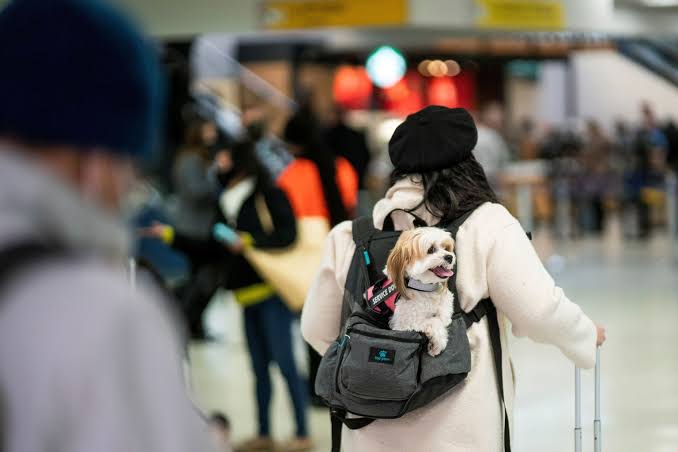
Carriers are the safer option for cats and small dogs. A hard-sided or well-ventilated soft carrier, secured with a seatbelt through the carrier’s strap loops, keeps small animals from becoming projectiles and gives anxious pets a den-like space that can actually reduce stress.
Seat covers don’t restrain your pet at all, but they protect your upholstery from fur, mud, and claws, and they pair well with a harness setup. If your dog already rides loose in the car, a seat cover plus a harness is a reasonable combination — just be aware that a cover alone offers zero crash protection.
Bottom line: for real safety, pick a harness or carrier rated for crash protection, not just “pet travel” branding. A seat cover is a nice-to-have, not a substitute.
Air Travel: What Airlines Actually Allow in 2026
Flying with a pet has gotten more restrictive over the past few years, and it’s worth knowing the current landscape before you book.
- In-cabin only is now the norm. <cite index=”1-1″>A growing number of U.S. carriers have stepped back from checked-pet and cargo programs for the general public, so for most travelers the practical choice is in-cabin or nothing</cite>. Delta, for example, <cite index=”7-1″>no longer accepts checked pets and instead offers cargo shipping through Delta Cargo for larger animals</cite>.
- Your pet’s carrier counts as your carry-on. <cite index=”1-1″>The in-cabin fee commonly runs $95 to $150 each way on U.S. airlines, and the carrier with your pet inside typically counts as your one carry-on or personal item</cite>, which may mean checking a bag you’d normally bring on board.
- Spots are limited and must be booked in advance. <cite index=”1-1″>Each airline sets its own carrier dimensions and cabin limits, and there are usually only a handful of pet spots per flight, so booking your pet the moment you book yourself is the single biggest thing that prevents last-minute problems</cite>.
- Carrier sizing is strict. <cite index=”1-1″>The bag must fit fully under the seat with your pet able to stand and turn around, and gate agents do check</cite>. Typical soft-carrier dimensions hover around 18×11×11 inches on U.S. carriers, though this varies by aircraft.
- Weight and breed rules still apply. American Airlines allows pets in-cabin if the pet plus carrier is under 20 pounds, with a $150 each-way fee. Airlines commonly restrict brachycephalic (snub-nosed) breeds — bulldogs, pugs, and similar breeds — from cargo travel because of the respiratory risk, even though <cite index=”1-1″>a small in-cabin pet is generally not affected by those heat-related cargo embargoes</cite>.
- Service dogs are treated differently. <cite index=”1-1″>A trained service dog is not considered a pet and flies free under separate rules, while emotional support animals are now treated the same as regular pets</cite> on most airlines.
- International travel adds paperwork. Expect to need a veterinary health certificate issued within a specific window before departure, proof of rabies vaccination, a microchip, and destination-specific entry requirements — especially for the UK, EU, and Hawaii.
Because policies genuinely differ by carrier and even by aircraft type, always confirm carrier dimensions and documentation requirements directly with the airline before you book.
What to Pack for Any Trip
A well-stocked pet travel bag saves you from mid-trip scrambles. Consider packing:
- Food and water — enough for the entire trip plus a buffer day, along with collapsible bowls
- Medications and a copy of vaccination records — especially important for flights or border crossings
- A familiar blanket or toy — scent-familiar items are one of the simplest ways to reduce travel anxiety
- Waste bags and a portable litter setup for cats
- A leash, harness, and ID tags with up-to-date contact information (plus a microchip, if your pet isn’t already chipped)
- A basic pet first-aid kit — gauze, tape, tweezers, and any allergy medication your vet has approved
- A recent photo of your pet on your phone, in case you’re ever separated
How to Calm an Anxious Pet During Travel
Travel anxiety is common, and most of it can be managed with preparation rather than sedation.
- Practice before the trip. Short car rides or time spent in the carrier at home, paired with treats, helps your pet associate travel gear with something positive rather than something scary.
- Keep the carrier or crate familiar. A pet who already naps in their crate at home will find it far less stressful in transit.
- Avoid a heavy meal right before departure. A light meal a few hours ahead reduces the chance of motion sickness.
- Use calming aids thoughtfully. Pheromone sprays, calming wraps, and vet-approved supplements can help mild anxiety, but never sedate a pet for air travel without your veterinarian’s explicit guidance — changes in cabin pressure and confinement can interact with sedatives in ways that are actually risky.
- Stay calm yourself. Pets pick up on their owner’s stress, so a relaxed, matter-of-fact tone during loading and boarding goes a long way.
Hotel and Accommodation Checklist
Before you book, confirm:
- Pet policy specifics — size and breed restrictions, pet fees or deposits, and any limit on the number of pets per room
- Designated relief areas on the property
- Room location — ground-floor or end-of-hall rooms tend to be quieter and easier for potty breaks
- In-room crate policy — some hotels require pets to be crated when left alone in the room
- Nearby vet or emergency clinic — worth knowing before you need it, not after
- Do Not Disturb reminders — a sign on the door prevents housekeeping from accidentally letting a nervous pet slip out
A quick call to the front desk to confirm current pet policy is always worth it — even “pet-friendly” listings can have restrictions that don’t make it into the online description.